Managing High Pressure Steam Systems: A Technical Guide to Industrial Integrity
April 15, 2026
Home+Managing High Pressure Steam Systems: A Technical Guide to Industrial Integrity
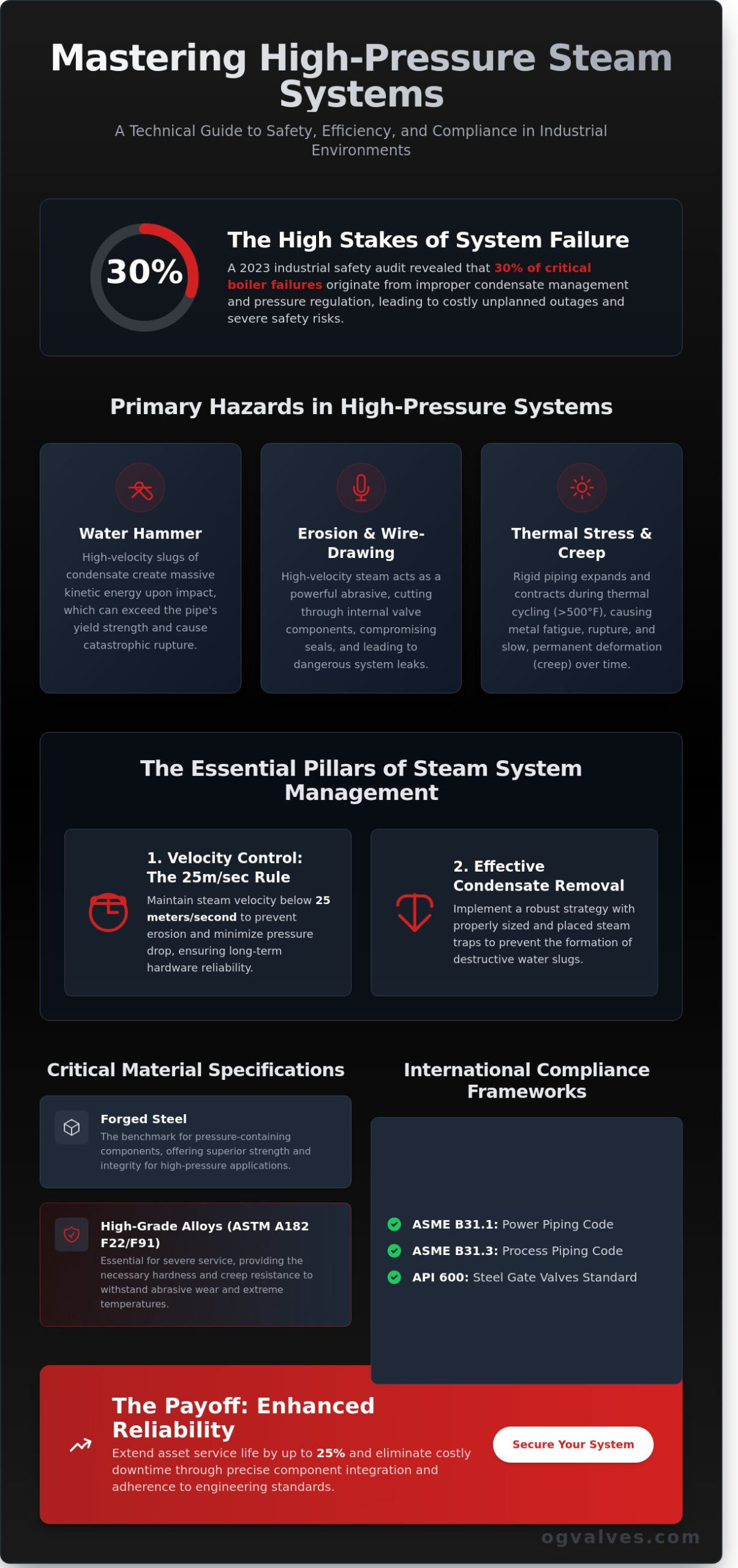
A 2023 industrial safety audit reveals that approximately 30% of critical boiler failures originate from improper condensate management and pressure regulation. For the lead engineer, managing high pressure steam systems isn’t just about operational output; it’s a rigorous exercise in risk mitigation and component integrity. You understand that even a minor deviation in valve specification can lead to catastrophic water hammer events or premature system erosion. Failure to adhere to precise engineering standards often results in unplanned outages that cost facilities thousands in hourly productivity losses.
This technical guide provides a clinical analysis of the engineering principles, material selections, and safety protocols required to maintain industrial steam infrastructure. You’ll learn how to achieve total compliance with ASME and API standards while extending the service life of your assets by up to 25% through precise component integration. We’ll examine the specific requirements for forged steel specifications and the rigorous testing needed to eliminate costly downtime. This analysis covers everything from initial material grade selection to the final implementation of international safety benchmarks.
Key Takeaways
Analyze the thermal dynamics of steam pressures exceeding 150 psi and the critical role of latent heat in heavy industrial energy transfer.
Implement rigorous protocols for managing high pressure steam systems, focusing on the 25m/sec velocity rule and advanced condensate removal to prevent water hammer.
Identify the material specifications, such as forged steel and high-alloys, necessary to ensure the integrity of pressure-containing components in severe service.
Verify system compliance with international engineering frameworks, including ASME B31.1, ASME B31.3, and API 600 standards.
Leverage technical expertise and fast-track delivery schedules to maintain infrastructure reliability and minimize downtime during planned shutdowns.
Understanding the Dynamics and Risks of High Pressure Steam
In industrial environments, high-pressure steam systems are defined by operating parameters that exceed 150 psi. These systems are the primary energy carriers for heavy industry because of the physics of latent heat. When water transitions to steam at high pressures, it carries a massive amount of thermal energy per pound. This density allows for the efficient transfer of heat across vast distances in a facility. High-pressure steam management is the balanced control of temperature, pressure, and condensate.
The high energy density inherent in these systems presents significant safety challenges. A breach in a pipe or a valve failure doesn’t just release hot water; it triggers a rapid expansion of steam that can lead to catastrophic structural damage. Engineers must account for the fact that steam at 150 psi occupies a volume significantly larger than its liquid state. Precision in component selection is not a suggestion; it’s a requirement for operational continuity and personnel safety.
Pressure Ranges and Industrial Applications
Industrial applications bifurcate steam usage based on the required state of the fluid. Saturated steam is typically utilized for process heating in petrochemical facilities at ranges between 150 psi and 300 psi. In contrast, power generation cycles often require superheated steam at pressures exceeding 600 psi. Superheating ensures that the steam remains in a gaseous state as it passes through turbine blades, preventing moisture-induced damage. As the operating pressure increases, the window for mechanical error narrows. Components must adhere to strict ASME Section I or Section VIII codes to withstand the internal stresses. Managing high pressure steam systems at these levels requires constant monitoring of the pressure-temperature curve to ensure the material limits of the forged steel or alloy components aren’t breached.
Primary Hazards: Erosion and Thermal Stress
High-velocity steam serves as a powerful abrasive agent within a piping network. When steam travels at high speeds through a partially open valve, it causes a phenomenon known as wire-drawing. This erosion cuts through internal valve components, compromising the seal and leading to dangerous leaks. Material selection is critical here. Using high-grade alloys like ASTM A182 F22 or F91 provides the necessary hardness to resist this abrasive wear.
Thermal stress presents another layer of risk. Rigid piping systems undergo significant physical expansion when transitioning from ambient temperatures to 500°F or higher. Without proper expansion loops and high-quality joints, this thermal cycling leads to fatigue and eventual rupture. Long-term exposure to these conditions can also result in “creep,” which is the slow, permanent deformation of metal under high stress. To mitigate these risks, engineers often integrate a High-Integrity Pressure Protection System (HIPPS). This safety instrumented system acts as a final barrier against over-pressurization, closing the source of pressure before the design limits of the downstream components are exceeded. Managing high pressure steam systems requires this level of redundant, technical oversight to prevent infrastructure failure.
Essential Pillars of Steam System Management: Velocity and Condensate
Technical precision in managing high pressure steam systems requires strict adherence to fluid dynamic limits. The 25m/sec rule serves as the critical velocity threshold for saturated steam transport. Exceeding this limit induces rapid erosion of internal components and increases pressure drop across the distribution network. When steam travels at excessive speeds, it carries entrained moisture that acts as an abrasive medium, compromising the integrity of forged steel fittings and precision-machined valve seats. Maintaining velocities within the 20 to 25m/sec range ensures a balance between pipework diameter costs and long-term hardware reliability.
Effective condensate removal is the secondary pillar of system stability. Condensed water formed into high-velocity slugs can dissipate massive kinetic energy upon impact, often exceeding the yield strength of the surrounding metallic pipework. Implementing steam system management best practices ensures that steam traps and moisture separators maintain the required dryness fraction. These components isolate liquid phases before they reach critical instrumentation, preserving the operational lifespan of the entire thermal circuit and preventing catastrophic mechanical failure.
Mitigating Water Hammer in High-Pressure Lines
Water hammer occurs through mechanical triggers such as inadequate drainage or abrupt valve closure. The resulting shockwaves cause fractured valve bodies and the failure of heavy-duty pipe supports. Engineers must prioritize the strategic placement of Y-type strainers to capture scale and debris that might otherwise obstruct trap orifices or damage downstream actuators. Integrating these protection devices is essential for managing high pressure steam systems where safety margins are narrow and the cost of downtime is high.
Optimising Steam Quality and Dryness Fraction
Steam quality directly correlates to heat transfer efficiency. Entrained water droplets reduce the latent heat capacity of the medium and accelerate localized corrosion rates within the piping. Low dryness fractions significantly shorten the service life of gate valves by causing wire-drawing on the wedge and seat surfaces. This phenomenon occurs when high-pressure water droplets erode the metal, creating leak paths that compromise isolation. Monitoring the steam-to-water ratio via high-precision separators ensures the dryness fraction remains above 0.95, which is necessary for high-stakes industrial applications. For technical consultation on selecting components that withstand these rigorous conditions, contact our engineering team to discuss your specific project requirements.
Critical Valve Selection for High Pressure Steam Environments
Standard commercial valves often fail in high-pressure industrial environments due to thermal expansion and high-velocity erosion. Effective management of high pressure steam systems requires components that meet ASME B16.34 standards for pressure and temperature ratings. While cast iron is suitable for low-pressure heating, it lacks the ductility needed for high-pressure cycles. Engineers must specify forged steel (ASTM A105) or alloy steel (ASTM A182) to prevent catastrophic shell failure. Sealing integrity relies on high-purity graphite packing and metal-to-metal seats, typically hard-faced with Stellite 6, to withstand temperatures up to 1,000°F without losing tight-shutoff capabilities.
Gate vs. Globe Valves in Steam Applications
Gate valves serve as the primary isolation point in main steam headers. Their design allows for a straight-through flow path, which results in negligible pressure drop. They aren’t intended for throttling; using a gate valve for flow regulation causes wire-drawing of the seat and premature leakage. Globe valves are the standard for flow regulation and pressure reduction. Their internal geometry forces steam to change direction, providing the resistance necessary for precise control. For systems operating above 250 psi, the transition from cast iron to forged steel is a mandatory safety specification to handle increased mechanical stress and thermal fatigue.
The Role of Check Valves in Preventing Backflow
Check valves are the primary defense against backflow and pressure surges. In high-velocity steam applications, piston check valves are superior to swing check designs. The spring-loaded piston minimizes disc chatter, a common cause of premature failure in swing checks. These components prevent “steam stall” by ensuring condensate return lines maintain unidirectional flow. Specifying non-slam check valves protects the boiler and upstream piping from the destructive forces of water hammer. Managing high pressure steam systems requires these specialized designs to ensure long-term operational safety and compliance with API 602 standards.
To maintain system integrity, procurement specialists should prioritize the following technical specifications:
Material Grade: ASTM A105 for temperatures up to 800°F; ASTM A182 F11 or F22 for higher creep resistance.
Seating: Solid Stellite or equivalent hard-facing to resist steam erosion.
Stem Packing: Die-formed flexible graphite with braided carbon fiber end rings for leak-free performance.
Testing: API 598 high-pressure closure testing to verify zero-leakage performance before installation.
Failure to adhere to these material standards results in increased downtime and safety risks. High-pressure steam is unforgiving; a minor leak at 600 psi can quickly erode a valve body beyond repair. Selecting valves based on technical compliance rather than initial cost is the only way to ensure the reliability of critical infrastructure.
Compliance Frameworks and Preventive Maintenance Protocols
Operational safety in high-pressure environments depends on strict adherence to established engineering codes. ASME B31.1 (Power Piping) and ASME B31.3 (Process Piping) provide the foundational requirements for design, materials, and testing. Managing high pressure steam systems effectively necessitates a deep understanding of these standards to ensure the pressure boundary remains intact under extreme thermal loads. These codes dictate the minimum wall thickness and allowable stress levels for all piping components. Failure to align with these specifications isn’t just a compliance issue; it’s a fundamental safety risk for the entire facility.
API 600 stands as the benchmark for valve wall thickness and stem durability in steam service. This standard is critical for heavy-duty steel gate valves that must endure the erosive effects of high-velocity steam. By specifying thicker walls and more robust stem diameters than general-purpose standards, API 600 ensures a longer service life in volatile environments. Engineers utilize these specifications to prevent premature fatigue in the valve trim. It’s the primary defense against the mechanical stresses of high-pressure operation.
Rigorous inspection cycles must include Positive Material Identification (PMI) testing to verify that the alloy composition matches the specified Mill Test Reports. Non-destructive examination (NDE) techniques, such as ultrasonic and radiographic testing, allow technicians to detect internal volumetric flaws without compromising the component. These tests are mandatory during initial commissioning and at scheduled intervals to monitor for stress corrosion cracking or wall thinning. Relying on visual inspections alone is insufficient for high-pressure steam headers.
Maintenance Schedules for High-Pressure Components
Daily monitoring of steam traps and pressure gauges is the first line of defense against system inefficiency. A single leaking trap can waste thousands of pounds of steam per hour, driving up fuel costs and destabilizing system pressure. Annual valve seat inspections and packing adjustments are necessary to prevent fugitive emissions and ensure tight shut-off. Industry data indicates that proactive replacement of components at 90% of their calculated fatigue life costs significantly less than emergency reactive repairs. Reactive maintenance often incurs expenses 3 to 4 times higher than planned interventions due to unscheduled downtime and expedited logistics.
Documentation and Traceability in Global Supply
Full traceability is non-negotiable for critical infrastructure. Every pressure-containing component must be accompanied by Mill Test Reports (MTRs) that document the chemical and physical properties of the heat lot. For installations within the European Economic Area, compliance with the Pressure Equipment Directive (PED) 2014/68/EU is a legal requirement. Maintaining a centralized digital asset register for critical valve maintenance history allows plant managers to track performance trends and verify compliance during audits. This level of documentation ensures that every part in the system meets the rigorous standards required for managing high pressure steam systems safely.
Ensure your facility meets the highest safety standards by integrating API 600 compliant valves into your high-pressure steam infrastructure.
Ensuring System Reliability with High-Specification Valve Supply
Effectively managing high pressure steam systems requires a rigorous approach to component selection and material integrity. OG VALVES LTD. supports global energy and petrochemical facilities by providing the technical expertise necessary to navigate complex fluid control challenges. High-specification valve supply isn’t merely a procurement task; it’s a critical safety protocol. Engineering teams must vet suppliers for strict adherence to international certification standards, including ASME B16.34 and API 624 for low-leakage performance. Procuring high-quality hardware serves as a direct investment in plant safety and long-term uptime. When a system operates at pressures exceeding 100 bar, the margin for material error is non-existent.
Minimising Downtime through Strategic Inventory
Global logistics networks allow for the rapid deployment of critical components to remote industrial sites. OG VALVES LTD. maintains a strategic inventory that enables fast-track delivery within 48 to 96 hours for urgent replacements during planned or unplanned shutdowns. Technical support teams assist in matching valve specifications to existing steam infrastructure, ensuring that replacement units meet exact face-to-face dimensions and pressure class requirements. It’s essential to reduce the cost of failure, as a single valve malfunction in a high-pressure line can result in production losses exceeding $50,000 per hour. Utilizing verified hardware like A105 forged steel or F91 alloy components ensures the system handles the thermal cycles common in modern power generation.
Partnering for Long-Term System Integrity
Long-term reliability stems from technical consultation that goes beyond the initial transaction. OG VALVES LTD. provides engineering insight into complex steam system challenges such as wire-drawing, cavitation, and thermal binding in gate valves. Every component supplied carries documented compliance with API and ISO standards, providing a verifiable audit trail for safety inspectors. This commitment to engineering excellence ensures that valves maintain their sealing integrity over thousands of cycles. Precision in manufacturing, such as the use of Stellite 6 hard-facing on seating surfaces, extends the service life of the equipment in harsh environments. A partnership with a specialist supplier ensures that your facility’s infrastructure remains compliant with the latest industry safety regulations.
Prioritizing Engineering Precision in Thermal Distribution
Effective oversight of industrial thermal energy requires a relentless focus on velocity regulation and the mechanical extraction of condensate. Maintaining steam velocities within the 25 to 35 meters per second range prevents the rapid erosion of internal piping surfaces. Successful managing high pressure steam systems depends on the integration of hardware that meets rigorous API 600 and ASME B16.34 specifications. These standards ensure that forged and cast steel components withstand the extreme thermal stresses inherent in oil, gas, and power generation environments.
System reliability isn’t a variable; it’s a requirement dictated by international compliance frameworks. OG Valves maintains an extensive inventory of API and ASME compliant valves ready for immediate deployment. Our technical expertise across the global energy sector ensures that your facility meets its performance benchmarks while minimizing industrial downtime through fast-track delivery protocols. Secure your system integrity with OG Valves’ high-specification industrial components. Your commitment to technical excellence ensures long-term operational success.
Frequently Asked Questions
What is the maximum recommended velocity for high-pressure steam in piping?
The maximum recommended velocity for high-pressure saturated steam is 40 to 60 meters per second (m/s) to prevent internal component erosion. If the steam’s superheated, velocities can reach up to 80 m/s without significant risk of moisture-induced damage. Exceeding these limits often results in excessive noise levels above 85 decibels and accelerated wear on valve seats, which compromises the long-term integrity of the entire piping network and safety infrastructure.
How does water hammer damage industrial valves in steam systems?
Water hammer induces hydraulic shock loads that often exceed the rated pressure of industrial valves by 400% or more. This kinetic energy causes immediate fracture of valve discs, deformation of stems, and catastrophic failure of gaskets. Managing high pressure steam systems requires robust condensate removal through steam traps to prevent these pressure surges from compromising API 600 gate valve integrity and causing dangerous steam leaks in the facility.
What are the best valve materials for high-temperature steam service?
Forged alloy steel grades like ASTM A182 F22 or F91 are the industry standard for steam services exceeding 538 degrees Celsius. These materials provide the high creep strength and oxidation resistance required for high-temperature cycles. For lower temperature high-pressure applications, ASTM A216 WCB cast carbon steel remains the primary specification for pressure-retaining components. Engineers don’t use standard cast iron because it lacks the ductility needed to survive thermal shock.
Why are globe valves preferred over gate valves for steam throttling?
Globe valves are mandatory for throttling because their design ensures linear flow control and minimizes seat erosion during partial openings. Standard gate valves experience high-velocity wire-drawing across the seating surface when used for regulation, leading to a 60% reduction in service life. The globe valve’s disk moves perpendicular to the flow, allowing for precise adjustment of steam volume without compromising the seal integrity or causing severe vibration within the pipeline.
What is the difference between saturated and superheated steam management?
Saturated steam management focuses on moisture removal via separators, while superheated steam requires precise temperature control to prevent thermal fatigue in piping. Superheated steam operates at temperatures above the saturation point, often exceeding 400 degrees Celsius, which necessitates higher grade alloy steel valves. Saturated systems are more prone to erosion-corrosion from water droplets, requiring stainless steel internal trim to maintain performance and prevent the degradation of valve internals over time.
How often should high-pressure steam valves be inspected for safety compliance?
High-pressure steam valves require a full internal inspection every 12 to 24 months according to NB-23 National Board Inspection Code standards. Safety relief valves must undergo testing every 6 months in critical high-pressure environments to ensure they actuate at the correct set pressure. Regular ultrasonic wall thickness measurements every 3 years help identify localized erosion before it leads to a containment breach, ensuring the system stays compliant with local safety regulations.
What role do strainers play in protecting high-pressure steam infrastructure?
Strainers remove solid particulates like pipe scale and weld slag that cause 70% of premature valve seat failures in steam lines. By installing Y-type strainers with 40-mesh stainless steel screens upstream of control valves, operators prevent abrasive wear on precision-machined surfaces. This protection is vital for managing high pressure steam systems because even small debris can bridge the gap in a closing valve, causing permanent leakage and increasing maintenance costs significantly.
Can standard gate valves be used for high-pressure steam isolation?
Standard gate valves are suitable for isolation provided they meet the pressure-temperature ratings defined in ASME B16.34. These valves must be used only in fully open or fully closed positions to avoid the turbulence that causes internal damage. Engineers typically specify flexible wedge gate valves for high-pressure steam to prevent thermal binding. This is a condition where temperature fluctuations lock the valve in the closed position, making it impossible to operate during startup.
 Responsive Menu