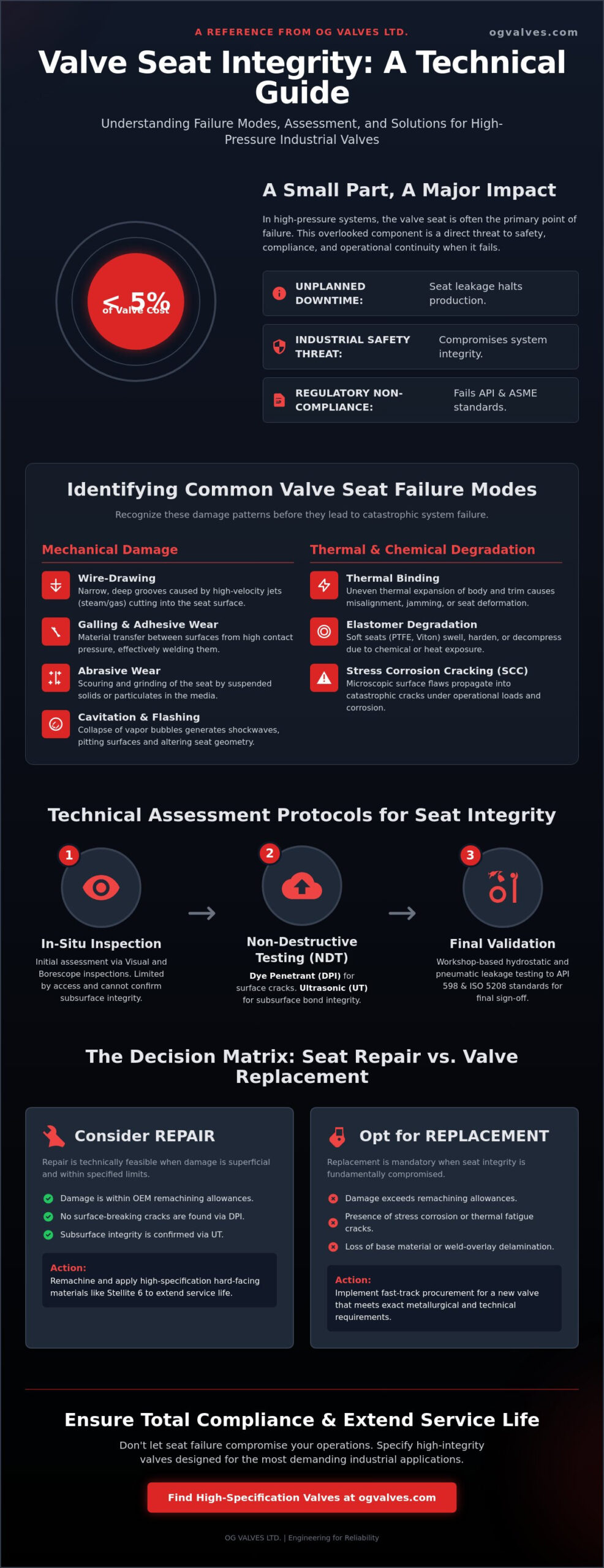
Is your facility’s operational continuity dependent on a component that represents less than 5% of your total valve assembly cost? In high-pressure environments, the valve seat is often the primary point of failure, yet it remains an overlooked specification during procurement. We understand that unplanned downtime due to seat leakage is a direct threat to industrial safety and regulatory compliance. This valve seat types and selection guide for industrial valves establishes the technical protocols required to identify and assess high-integrity seats according to API and ASME standards.
You’ll gain the technical expertise needed to diagnose specific failure modes and select superior materials that extend service life in high-velocity steam or corrosive applications. We’ll examine the critical relationship between metallurgical precision and fluid dynamics to ensure your systems meet the rigorous demands of API 598 pressure testing. The following analysis provides a clinical review of material grades and the engineering logic necessary for total compliance with ASME B16.34.
Key Takeaways
- Identify critical damage modes such as wire-drawing and surface-breaking cracks through rigorous visual and Dye Penetrant Inspection protocols.
- Utilize this valve seat types and selection guide for industrial valves to ensure full compliance with API 598 and ASME B16.34 standards.
- Evaluate the technical feasibility of seat repair by measuring damage against OEM-specified remachining allowances.
- Select high-specification hard-facing materials like Stellite 6 to extend service life in corrosive or high-velocity environments.
- Implement fast-track procurement strategies to source replacement valves that meet exact metallurgical and technical requirements.
Industrial Valve Seat Failure: Identification and Damage Modes
The integrity of a valve seat is the determining factor in achieving a bubble-tight shut-off. In industrial systems, even microscopic deviations in seat geometry lead to high-pressure bypass, which compromises system safety and process efficiency. When evaluating valve seat types and selection guide for industrial valves, engineers must first recognize the specific damage modes caused by high-velocity media. Wire-drawing, a form of localized erosion, manifests as narrow, deep grooves across the seating surface. This phenomenon occurs frequently in high-pressure steam or gas services when the valve is cracked open, creating a high-velocity jet that cuts through the base metal or hard-facing.
Metal-seated ball and gate valves are particularly susceptible to galling and adhesive wear. This occurs when high contact pressure and friction between moving parts cause material transfer, effectively welding the surfaces together. If the seat doesn’t maintain the surface finish required for ISO 5208 Leakage Rate A compliance, the valve’s sealing capability is permanently compromised. In control services, cavitation and flashing present additional risks. The collapse of vapor bubbles near the seat surface generates shockwaves capable of pitting even hardened alloys, eventually altering the seat’s fundamental geometry.
Common Mechanical Damage Profiles
Abrasive wear remains a primary concern in pipelines carrying suspended solids or line particulates. These contaminants act as grinding media, scouring the seat during every cycle. Manual operation also introduces risks. Over-torqueing a handwheel can deform the seat ring or crush soft-seated components. In aggressive petrochemical media, the synergy between corrosion and erosion accelerates material loss, as the fluid’s velocity constantly strips away protective oxide layers. It’s essential to recognize these patterns before they lead to total system failure.
Thermal and Chemical Degradation
Thermal binding occurs when temperature fluctuations cause the valve body and trim to expand at different rates, leading to seat-to-closure misalignment. This often results in a jammed valve or permanent seat deformation. For soft-seated valves, elastomer degradation is a common failure point. Chemicals or extreme heat can cause PTFE, Viton, or Devlon to swell, harden, or undergo explosive decompression. In high-temperature super-alloys, stress corrosion cracking (SCC) can initiate at microscopic surface flaws, leading to catastrophic failure under operational loads. Understanding these failure modes is the first step in utilizing a valve seat types and selection guide for industrial valves to prevent premature equipment turnover.
Technical Assessment Protocols for Valve Seat Integrity
Maintaining operational safety requires more than cursory observations. A comprehensive valve seat types and selection guide for industrial valves dictates that integrity assessment must follow standardized Non-Destructive Testing (NDT) procedures. Visual inspection is the primary step, but it’s often insufficient for identifying the early stages of material fatigue. Dye Penetrant Inspection (DPI) is mandatory for identifying surface-breaking cracks that are invisible to the naked eye. This clinical approach ensures that microscopic stress corrosion or thermal fatigue is documented before a total loss of containment occurs.
Subsurface integrity is equally critical, particularly in welded or overlaid seats where the bond between the seat and body is a potential failure point. Ultrasonic testing (UT) allows engineers to verify bond integrity and identify hidden voids or delamination that could lead to seat displacement. Final validation must always conclude with standardized leakage testing. Adherence to API 598 and ISO 5208 ensures the assembly meets the required pressure-tight specifications for its service class. If you’re identifying these failure modes in your current infrastructure, reviewing a high-specification selection of industrial valves can help establish a more resilient baseline.
In-Situ Assessment vs. Workshop Inspection
Borescope inspections provide a preliminary view but are restricted by lighting and access angles in complex assemblies. They cannot confirm the subsurface bond integrity required for high-integrity service. If pressure drop data indicates a deviation from the baseline, or if visual evidence of wire-drawing is detected, the valve must be removed for bench testing. Workshop environments allow for hydrostatic and pneumatic testing that in-situ conditions can’t replicate. Criteria for removal should be based on the severity of the leakage and the criticality of the process line.
Measuring Seat Recession and Concentricity
Quantifying seat recession is vital for high-cycle isolation valves where repeated friction alters the original dimensions. Specialized gauges must be used to verify seat-to-guide alignment and concentricity. Any deviation in these measurements leads to uneven loading, which accelerates the wear patterns discussed in previous sections. Accurate documentation of these damage profiles is necessary for compliance audits and insurance verification. This methodical data collection is a cornerstone of any professional valve seat types and selection guide for industrial valves used in global infrastructure projects.
The Decision Matrix: Seat Repair vs. Valve Replacement
Determining whether to refurbish a seating surface or initiate a full valve replacement requires a clinical assessment of the component’s remaining wall thickness. On-site lapping and grinding are viable only for superficial surface irregularities that haven’t compromised the seat’s fundamental geometry. Once damage exceeds the remachining allowance specified by the Original Equipment Manufacturer (OEM), structural integrity is at risk. This decision matrix is a core component of any comprehensive valve seat types and selection guide for industrial valves, as it weighs technical feasibility against operational risk.
Safety implications are paramount in critical isolation services. Repairing a seat in a high-pressure environment introduces variables that don’t exist with new, factory-tested units. A repaired seat might pass an initial API 598 pressure test but fail prematurely under thermal cycling or high-velocity flow. For lethal or high-integrity services, the cost of a potential failure far outweighs the procurement expense of a new, high-specification component. Engineers must prioritize functional reality over short-term maintenance savings when the integrity of the pressure boundary is at stake.
Economic Considerations for Plant Managers
Calculating the true cost of maintenance involves more than just the repair invoice. You’ve got to account for the extended downtime required for specialized field machining and the potential for a shortened service life. Repaired seats rarely match the longevity of new, high-spec components. Additionally, non-OEM seat modifications often void existing warranties, leaving the facility liable for future failures. In high-stakes infrastructure, the reliability of a new valve often provides a superior return on investment compared to repeated repair cycles.
Regulatory and Compliance Constraints
Major seat repairs frequently trigger mandatory recertification requirements. Any modification that alters the original dimensions of the pressure-retaining boundary can impact Pressure Equipment Directive (PED) and ASME compliance. Engineers must ensure that any refurbished valve is re-tested and documented to maintain the facility’s regulatory standing. For a broader look at industry requirements, consult our Industrial Valves: The Engineer’s Comprehensive Guide. Adhering to these rigorous standards ensures that your selection process remains technically sound and legally defensible.
Specifying Replacement Valves for Enhanced Seat Life
Mitigating the erosion and adhesive wear modes identified in previous sections requires a clinical approach to material specification. When utilizing this valve seat types and selection guide for industrial valves, engineers must prioritize metallurgy that aligns with NACE MR0175/ISO 15156 for sour service environments. This standard is non-negotiable in petrochemical applications where sulfide stress cracking poses a catastrophic risk to pressure boundary integrity. Selecting the correct hard-facing material is the most effective method for extending the mean time between failures (MTBF) in severe service conditions.
Stellite 6 remains the industry benchmark for high-temperature steam applications. Its cobalt-based matrix provides exceptional red-hardness and galling resistance, maintaining its mechanical properties even at elevated temperatures. However, in highly erosive slurry services, Tungsten Carbide hard-facing is often the superior choice. While Stellite 6 offers versatility, Tungsten Carbide provides a higher hardness rating on the Rockwell C scale, which is essential for preserving seat geometry against abrasive particulates. Every replacement component must be backed by EN 10204 3.1 certification to ensure full material traceability from the foundry to the final assembly. You can view our full range of certified industrial valves to match these high-integrity specifications to your specific project requirements.
Advanced Material Selection for Niche Environments
Offshore and subsea installations demand materials with high resistance to chloride-induced pitting and crevice corrosion. In these environments, specifying Duplex or Super Duplex alloys for seat rings and trims is standard practice for long-term durability. For cryogenic services, such as LNG processing, high-performance polymers like PCTFE (Kel-F) are required to maintain seal flexibility at temperatures reaching -196°C. For a deeper technical review of material grades used in isolation services, refer to our A Technical Guide to Industrial Gate Valves.
Design Improvements to Mitigate Future Damage
Mechanical design is as critical as material choice in reducing seat degradation. Transitioning from traditional concentric designs to triple-offset butterfly valves eliminates seat friction by ensuring the seal only makes contact at the final point of closure. This geometric precision prevents the dragging and scuffing that leads to premature leakage. Detailed design mechanics are covered in The Engineer’s Guide to Industrial Butterfly Valves. Additionally, implementing upstream debris screens and strainers provides a physical barrier against the line particulates that cause abrasive wear, further protecting the integrity of your valve seat types and selection guide for industrial valves implementation.
Procurement of High-Specification Replacement Valves
Securing high-integrity replacements requires a procurement strategy that prioritizes technical accuracy over transactional speed. Once you’ve utilized this valve seat types and selection guide for industrial valves to identify the necessary metallurgy and design, the focus shifts to sourcing. Verifying seat and trim specifications is a critical step where technical support becomes indispensable. A minor discrepancy in material grade or hard-facing thickness can lead to the premature failure modes discussed earlier. Procurement teams must demand full documentation to ensure that every unit meets the operational requirements of the facility.
Final verification of new inventory must align with international standards such as API 6D and API 600. These protocols provide the necessary framework for assessing the mechanical integrity and pressure-retaining capabilities of the valve assembly. Logistical considerations also play a vital role, especially when delivering to remote industrial sites. Coordinating global delivery schedules ensures that critical components are on-site before a scheduled maintenance window begins. This minimizes the risk of extended downtime and ensures that the facility remains compliant with its safety and operational mandates.
OG VALVES LTD.: Technical Supply Excellence
OG VALVES LTD. maintains a comprehensive inventory of gate, ball, and globe valves designed for the most demanding industrial applications. Our technical expertise focuses on material selection for aggressive and sour media. Precision is mandatory. We ensure that every valve supplied meets the rigorous demands of NACE MR0175. We don’t just provide hardware; we provide clinical precision in engineering specifications. Every component undergoes strict adherence to international testing and quality assurance protocols. This commitment to functional reality ensures that our partners receive valves capable of enduring high-velocity flow and corrosive environments without compromise.
Ensuring Minimal Operational Disruption
Coordinating with procurement teams during scheduled maintenance shutdowns is essential for operational continuity. We leverage a robust global supply chain to source niche industrial specifications that standard vendors often lack. Whether your project requires specialized butterfly valves or high-pressure check valves, our team ensures the technical integrity of every seat and trim configuration. This methodical approach to supply chain management mitigates the risk of receiving non-compliant hardware. To secure your infrastructure, you should Consult with OG VALVES LTD. for high-integrity valve procurement to ensure your next replacement cycle meets the highest engineering standards.
Advancing System Integrity Through Precise Seat Specification
Maintaining the pressure-tight integrity of critical isolation services depends on the clinical application of the protocols discussed. Accurate diagnosis of failure modes like wire-drawing or cavitation is the first step toward preventing unplanned facility downtime. This valve seat types and selection guide for industrial valves establishes the technical baseline required for engineers to transition from reactive maintenance to proactive metallurgical selection. Adhering to API and ASME standards isn’t just a regulatory requirement; it’s a fundamental necessity for industrial safety and process efficiency.
OG VALVES LTD. supports your operational goals through an extensive inventory of API and ISO compliant valves. We provide specialist technical support for complex petrochemical specifications, ensuring trim and seat configurations meet the most rigorous demands of the field. Our global fast-track delivery capabilities ensure that critical infrastructure projects remain on schedule regardless of geographical constraints. Securing your facility’s long-term performance requires components engineered for functional reality. Request a Technical Quote for Replacement Industrial Valves and ensure your systems operate with unwavering reliability.
Frequently Asked Questions
How do I know if a valve seat needs replacement or just lapping?
Replacement is mandatory when damage depth exceeds the OEM-specified remachining allowance. Lapping is reserved for superficial surface irregularities or minor pitting that doesn’t compromise the fundamental seat geometry. Use visual inspection and precision gauges to measure the remaining wall thickness of the seat ring. If Non-Destructive Testing reveals subsurface cracks or deep wire-drawing, lapping won’t restore the bubble-tight seal required for high-pressure service.
What is the maximum allowable leakage rate for an industrial valve seat according to API 598?
API 598 defines allowable leakage rates based on valve size and seat material. For soft-seated valves, the standard requires zero visible leakage, often termed bubble-tight, during the test duration. Metal-seated valves are permitted a specific number of drops per minute, which increases with the nominal pipe size. You must consult the API 598 leakage tables for the exact quantifiable limits applicable to your specific valve class and size.
Can valve seats be replaced in-situ for high-pressure systems?
In-situ seat replacement is generally not recommended for high-pressure industrial valves due to the precision required for alignment. Achieving the necessary seat-to-body bond integrity often requires shop-controlled welding or specialized hydraulic pressing. While some top-entry designs allow for component swaps, most high-integrity valves must be removed to a workshop. This ensures that resurfacing and pressure testing meet the rigorous standards outlined in this valve seat types and selection guide for industrial valves.
What are the most durable materials for industrial valve seats in corrosive environments?
Duplex stainless steels and cobalt-based alloys like Stellite 6 provide the highest durability in corrosive media. For sour gas service, materials must comply with NACE MR0175/ISO 15156 to prevent sulfide stress cracking. Super Duplex and Inconel 625 are frequently specified for offshore environments where chloride pitting is a risk. These high-specification alloys maintain their mechanical integrity and surface finish far longer than standard 316 stainless steel in aggressive petrochemical services.
Does seat damage always indicate a failure of the valve actuator?
No, seat damage is frequently caused by process conditions rather than actuator malfunction. While an over-torqued actuator can crush a seat, most damage stems from erosion, cavitation, or line particulates. However, an improperly calibrated actuator might fail to provide sufficient seating force, leading to high-velocity bypass and subsequent wire-drawing. Engineers should inspect both the trim and the automation system to identify the root cause of a sealing failure.
How does API 598 define a successful seat integrity test for metal-seated valves?
A successful test under API 598 requires the valve to hold pressure for a specified duration with leakage below the maximum allowable rate. The test involves applying liquid or gas pressure to the closure member and observing the downstream side. For metal-seated gate and globe valves, the duration ranges from 15 to 120 seconds depending on the nominal size. Success is documented when the quantifiable leakage remains within the drops-per-minute limit defined by the standard’s reference tables.
What is the difference between a metal-seated and a soft-seated valve in terms of damage assessment?
Soft-seated valves are assessed for deformation and chemical degradation, whereas metal-seated valves are evaluated for erosion and galling. Soft seats made of PTFE or Viton often fail due to extrusion or explosive decompression. Metal seats require NDT methods like Dye Penetrant Inspection to find surface-breaking cracks. This valve seat types and selection guide for industrial valves emphasizes that soft seats are typically replaced during maintenance, while metal seats may undergo precision lapping if structural integrity remains intact.
Why is concentricity between the valve seat and stem guide so critical in globe valves?
Precise concentricity ensures that the plug makes uniform contact with the seat ring to achieve a bubble-tight seal. Any misalignment between the stem guide and the seat leads to uneven loading. This results in localized wear and high-pressure bypass on one side of the assembly. In high-cycle applications, even a 0.1mm deviation can accelerate seat recession and lead to premature failure. Maintaining this alignment is essential for meeting the leakage requirements of ASME B16.34.
 Responsive Menu