Calculating Total Cost of Ownership for Industrial Valves: A Technical Procurement Framework
April 24, 2026
Home+Calculating Total Cost of Ownership for Industrial Valves: A Technical Procurement Framework
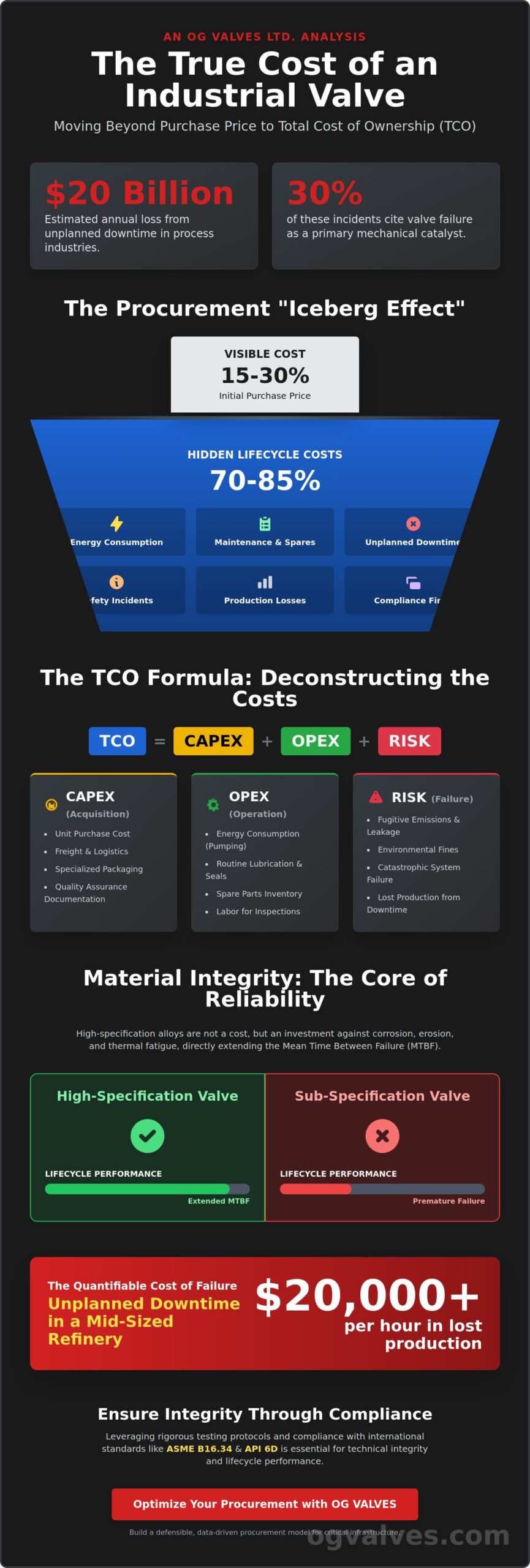
Unplanned downtime in the process industries accounts for an estimated $20 billion in annual losses, with valve failure cited as a primary mechanical catalyst in 30% of these incidents. Procurement specialists often face internal pressure to prioritize the initial purchase price, even when they recognize that sub-specification components compromise long-term system integrity. It’s a difficult position when spreadsheet-driven decisions clash with the engineering realities of high-pressure environments. This analysis provides a rigorous, data-driven framework for calculating the total cost of ownership for industrial valves, moving beyond capital expenditure to account for maintenance cycles and API compliance. You’ll gain the technical justification required to defend high-specification procurement choices to stakeholders who focus on upfront costs.
We’ll examine the specific variables of the TCO equation, including MTBF (Mean Time Between Failure) data, the cost of fugitive emissions, and the financial implications of non-compliance with ASME B16.34 standards. By quantifying these risks, engineers can align their infrastructure strategy with international safety benchmarks while reducing the frequency of unplanned interventions. This systematic approach ensures that durability and performance are prioritized over short-term savings, resulting in a defensible procurement model for critical infrastructure projects.
Key Takeaways
Identify the “Iceberg Effect” in procurement by calculating the total cost of ownership for industrial valves through a framework of acquisition, operational, and risk-adjusted failure costs.
Analyze hidden drivers of operational expenditure, focusing on how specific valve designs and pressure drops impact long-term pumping efficiency and maintenance intervals.
Evaluate the strategic financial advantages of high-specification alloys in mitigating the risks of corrosion, erosion, and thermal fatigue in critical infrastructure.
Quantify the economic impact of lead times and fast-track logistics to minimize the high cost of production downtime during emergency valve replacements.
Leverage rigorous testing protocols and international standards compliance to ensure lifecycle performance and technical integrity in high-stakes industrial environments.
The Architecture of Total Cost of Ownership (TCO) in Industrial Valve Procurement
Industrial procurement strategies often fail when they focus exclusively on the initial invoice price. This narrow perspective ignores the Total Cost of Ownership (TCO), which represents the aggregate of all expenses incurred throughout the asset’s functional lifecycle. In high-stakes environments like oil refineries or water treatment facilities, the purchase price typically accounts for only 15% to 30% of the total expenditure. The remaining 70% or more resides in operational maintenance, energy consumption, and risk-adjusted failure costs. This “Iceberg Effect” means that a lower-cost valve with inferior metallurgy often leads to systemic financial losses.
Valve selection directly dictates the Mean Time Between Failure (MTBF) for the entire process loop. A valve that fails prematurely doesn’t just require a replacement part; it forces a full system shutdown. For a mid-sized refinery, unplanned downtime can cost upwards of $20,000 per hour in lost production. Calculating the total cost of ownership for industrial valves requires a clinical assessment of material integrity and strict compliance with standards like API 6D or ASME B16.34. This framework ensures that procurement decisions are based on long-term asset performance rather than short-term budget cycles.
The TCO Formula: CAPEX, OPEX, and Risk
Capital Expenditure (CAPEX) includes the unit price plus logistics, specialized packaging, and the technical documentation required for international regulatory compliance. Operating Expense (OPEX) covers routine lubrication, seal replacements, and the energy required to actuate the valve. Risk costs are the most volatile variables. These involve quantifying the financial impact of fugitive emissions, safety incidents, and unplanned downtime. Rigorous engineering specifications reduce these risk variables by ensuring the valve meets the precise pressure and temperature demands of the service environment.
Acquisition: Unit cost, freight, and quality assurance documentation.
Operation: Energy consumption, spare parts inventory, and labor for inspections.
Risk: Potential for leakage, environmental fines, and catastrophic system failure.
Lifecycle Phases of Industrial Valves
The lifecycle begins with Phase 1: Specification and Procurement. Accuracy during this stage prevents installation delays that can extend project timelines by 10% or more. Phase 2 involves the operational service life. During this period, the frequency of required inspections and the durability of internal components like the ball, seat, or stem determine the ongoing labor cost. High-quality materials like forged steel extend these intervals significantly compared to lower-grade cast alternatives. Phase 3 is Decommissioning. This phase accounts for the environmental costs of valve disposal or the feasibility of refurbishment. Analyzing the total cost of ownership for industrial valves across these three phases provides a data-driven framework for sustainable asset management.
Hidden Drivers of Operational Expenditure (OPEX)
Procurement teams often prioritize the initial purchase price, yet operational expenses typically account for 60% to 80% of the lifecycle cost. The total cost of ownership for industrial valves is heavily influenced by energy efficiency and maintenance frequency. Energy consumption remains a primary hidden driver. A poorly selected gate valve with a non-optimized bore results in substantial pressure drops. These drops force pumps to work harder, increasing electricity consumption. In a high-flow water treatment facility, even a marginal increase in resistance translates to quantifiable kilowatt-hour losses over a decade of service.
Technical teams must utilize a systematic approach when calculating total cost of valve ownership to account for these parasitic energy losses and labor requirements. Carrying excessive spare parts for unreliable components creates a significant financial burden. Industry data suggests that inventory carrying costs range from 18% to 25% of the item’s value per year. Standardizing on high-integrity components reduces the necessity for deep safety stocks, freeing up capital for other critical infrastructure needs.
Maintenance Cycles: Commodity vs. Engineered Valves
Standard soft-seated ball valves frequently require seat replacements every 12 to 18 months in abrasive or high-temperature services. Conversely, metal-seated alternatives extend these intervals to 60 months or more in identical conditions. The reliability of the valve actuator also dictates the frequency of remote site visits and specialized labor costs. Mean Time Between Failures (MTBF) represents the predicted elapsed time between inherent failures of a mechanical system during normal system operation and serves as the primary metric for calculating annual OPEX savings.
Leakage and Environmental Fines
Fugitive emissions represent both a product loss and a regulatory risk. In petrochemical sectors, Volatile Organic Compound (VOC) leaks attract heavy penalties under EPA or local environmental standards. A single leaking valve stem can lose hundreds of kilograms of product annually, impacting the bottom line before any fines are even issued. For hazardous media, bellows-sealed valves provide a zero-leakage solution that eliminates the risk of environmental non-compliance. Engineers should review technical specifications for low-emission packing to mitigate these risks early in the procurement phase. Selecting valves that meet API 622 or API 624 standards ensures long-term integrity and reduces the total cost of ownership for industrial valves by avoiding remediation costs.
Mitigating Risk through Material Integrity and Standards Compliance
Material integrity represents the primary defense against corrosion, erosion, and thermal fatigue in process piping. Selecting the correct alloy at the design stage dictates the long-term total cost of ownership for industrial valves. While carbon steel is often the default choice, high-specification alloys like Super Duplex or Inconel 625 provide a distinct TCO advantage in aggressive environments. These materials prevent premature wall thinning and localized pitting. By investing in superior metallurgy, operators reduce the frequency of emergency shutdowns and avoid the high costs of unplanned maintenance.
Positive Material Identification (PMI) serves as a critical quality control gate. It ensures that the chemical composition of the valve body and trim matches the specified Material Test Report (MTR). This verification prevents catastrophic failures caused by accidental material substitution. Without rigorous PMI, an incorrect alloy might be installed in a high-temperature or corrosive line, leading to rapid degradation and safety hazards. Accurate alloy verification is a non-negotiable step in maintaining asset integrity.
Corrosion Resistance and Service Life Extension
High-pressure steam applications require materials that can withstand rapid thermal cycling. Cast iron is often too brittle for these environments, whereas forged steel provides the ductility and strength necessary for safe operation. Trim material selection also significantly impacts butterfly valve longevity. For instance, using 316 stainless steel or Monel for the disc and stem prevents oxidation in seawater service. Applying hardfacing, such as Stellite 6, to seating surfaces reduces abrasive wear and erosion. This application of cobalt-based alloys can extend the interval between major overhauls by over 150% in high-velocity flow conditions.
Compliance with International Standards
Valves certified to API 6D and API 600 standards offer a lower risk-adjusted total cost of ownership for industrial valves. These certifications guarantee that the valve meets minimum wall thickness, stem diameter, and testing requirements. Non-compliant valves carry hidden costs, including increased insurance premiums and potential failures during regulatory safety audits. If a valve doesn’t meet ISO or ASME standards, it risks being rejected during a site inspection, leading to project delays. Rigorous shell and seat pressure testing according to API 598 standards is essential to verify mechanical integrity and minimize the risk of fugitive emissions, directly contributing to TCO reduction.
Strategic Procurement: The Financial Impact of Lead Times and Logistics
Strategic procurement directly influences the total cost of ownership for industrial valves through the mitigation of logistical volatility. Lead times shouldn’t be viewed as mere scheduling metrics. They are financial risk factors. In heavy industry, the delta between a standard lead time and an emergency replacement can represent millions in lost revenue. A clinical approach to supply chain management prioritizes availability and technical documentation to ensure long-term asset integrity.
The Real Cost of Unplanned Downtime
Unplanned downtime in the petrochemical or power sectors carries a heavy price. Industry data suggests that the average cost of an outage reaches $250,000 per hour. Documentation delays stall projects. A failure in a single check valve within a high-pressure pumping station can halt an entire process line. This creates a domino effect. Repair crews remain idle while awaiting parts. Emergency air-freight logistics for a 10-inch forged steel valve can exceed the unit’s base cost by 200% or more. Local stock availability from a global partner mitigates these high-impact risks. It’s the difference between a 24-hour resolution and a two-week catastrophe. Fast-track delivery protocols are a critical hedge against production loss.
Supply Chain Reliability and Project Timelines
Project commissioning often depends on the precision of technical documentation. Missing Material Test Reports (MTRs) or non-compliant pressure test certifications prevent site handovers. These delays trigger liquidated damages. Consolidating the sourcing of gate, globe, and ball valves through a single technical partner simplifies the verification process. It ensures every component adheres to ASME B16.34 and API 6D standards simultaneously. This consolidated approach reduces the administrative burden and lowers the total cost of ownership for industrial valves by eliminating redundant inspections.
Procurement specialists must balance inventory availability with custom manufacturing needs. While off-the-shelf units solve immediate crises, specific applications demand specialized alloys or cryogenic testing. Global logistics expertise allows for the synchronization of these variables. It ensures that custom-engineered solutions arrive within the project window. Technical support plays a vital role here. Right-first-time selection prevents the 12% of project delays caused by incorrect valve specifications. Precision in the procurement phase is a prerequisite for operational excellence.
The OG Valves Approach: Optimising Lifecycle Performance
OG Valves applies technical precision to eliminate procurement errors that inflate the total cost of ownership for industrial valves. We ensure every component meets exact application requirements, from pressure ratings to material compatibility. This focus on upfront specification reduces the risk of premature failure and unplanned downtime. Our engineering team evaluates process conditions to prevent cavitation, corrosion, and erosion before they impact the bottom line. Our global supply chain capabilities further reduce the financial burden of long lead times; we ensure critical components arrive when scheduled to prevent project overruns and costly site delays.
Rigorous Quality Assurance Protocols
Reliability is verified through clinical testing protocols at every stage of production. Our in-house facilities conduct Positive Material Identification (PMI) to confirm alloy compositions and hydrostatic pressure testing to validate shell integrity before dispatch. We maintain an extensive inventory of industrial valves, including forged steel gate valves and high-performance butterfly valves, to support immediate operational needs. Full traceability is a non-negotiable standard. Every valve is accompanied by EN 10204 3.1 or 3.2 certification. This documentation ensures long-term asset management is based on verified data, facilitating easier maintenance and part replacement over a 20-year service life.
PMI Testing: Verification of material grades like 316L stainless steel or Duplex alloys.
Pressure Testing: Adherence to API 598 or ISO 5208 leak rate standards.
Visual Inspection: MSS-SP-55 compliance for casting and forging quality.
Certification: Immediate access to MTRs (Material Test Reports) for all components.
Partnering for Long-Term Reliability
We transition procurement from a transactional task to a strategic technical partnership. Our experts guide engineers through the complexities of API 6D, ASME B16.34, and ISO 5208 standards. We specialise in selecting specific material grades, such as cryogenic service alloys, to match harsh operating environments. This ensures compliance in critical infrastructure where the cost of a single leak can exceed the initial purchase price by 500% when environmental fines and cleanup are factored in. High-integrity supply is the only logical conclusion for a strategy focused on the total cost of ownership for industrial valves. Quality-first procurement delivers the lowest TCO by extending service intervals, reducing the frequency of replacements, and ensuring operational safety in high-stakes environments.
Optimizing Lifecycle Performance Through Technical Precision
Effective procurement strategies prioritize long-term reliability over initial capital expenditure. Industry data suggests that maintenance and unplanned downtime account for the majority of the total cost of ownership for industrial valves. Engineering teams must evaluate component integrity through rigorous, data-driven protocols. It’s essential to enforce strict adherence to API 6D and ASME B16.34 standards to ensure structural stability in high-pressure service environments. The OG Valves quality assurance framework includes comprehensive Positive Material Identification (PMI) and high-pressure hydrostatic testing to eliminate material non-conformance risks. Our fast-track delivery capabilities support global infrastructure projects by reducing lead times that frequently exceed 26 weeks in standard supply chains. Transitioning from a vendor-based model to a technical partnership secures your operational continuity and safety. We invite you to request a technical consultation and quote for your high-specification valve requirements. Proactive technical alignment today ensures your critical systems perform with absolute precision for decades to come.
Frequently Asked Questions
What is the difference between CAPEX and OPEX in valve procurement?
CAPEX refers to the initial purchase price of the valve hardware, whereas OPEX encompasses the recurring costs of maintenance, repair, and operation over the equipment’s service life. In a standard 20 year lifecycle, CAPEX typically accounts for only 15% to 25% of the total cost of ownership for industrial valves. OPEX includes technical labor for inspections, replacement of internal components like seats or gaskets, and the energy required for pneumatic or electric actuation.
How do I calculate the cost of downtime for a failed industrial valve?
Calculate the cost of downtime by multiplying the hourly production loss by the total duration of the outage required for valve isolation and replacement. If a processing plant loses 500 units per hour at a margin of 100 dollars per unit, an unplanned 8 hour failure results in 400,000 dollars in lost revenue. It’s essential to include the costs of emergency logistics and the specialized labor rates for rapid response teams in this final calculation.
Does a higher initial purchase price always lead to a lower TCO?
A higher initial price results in a lower TCO when the investment targets superior metallurgy or precision engineering that extends the Mean Time Between Failures (MTBF). For example, selecting a forged steel body over a cast alternative can reduce structural failure risks by 30% in high pressure environments. This durability prevents frequent replacement cycles, which lowers the long term total cost of ownership for industrial valves by reducing procurement and installation frequency.
What role do international standards like API 600 play in TCO?
International standards like API 600 establish rigorous specifications for wall thickness and stem diameters to ensure mechanical integrity. Adherence to these benchmarks guarantees that a valve can withstand 2,000 or more cycles without losing sealing performance. Valves that don’t meet these standards often require replacement 40% sooner than certified components, leading to higher capital reinvestment costs and increased risk of catastrophic failure in critical infrastructure.
How does material selection affect the maintenance costs of industrial valves?
Material selection determines the corrosion rate and the subsequent frequency of technical maintenance interventions. Utilizing Duplex stainless steel instead of standard Carbon Steel in corrosive environments can eliminate the need for annual protective coatings and extend the component’s functional life by 15 years. While the material cost is higher, the reduction in manual labor and spare part inventory provides a measurable advantage in long term life cycle budgeting.
Can fast-track delivery actually reduce the total cost of ownership?
Fast-track delivery reduces TCO by minimizing the financial impact of delayed project commissioning or extended facility shutdowns. A 14 day reduction in lead time can save a facility 100,000 dollars per day in missed production targets. These savings frequently outweigh the 20% to 30% surcharge typically applied to expedited manufacturing schedules, making it a strategic choice for critical path components that affect overall plant uptime.
What are the hidden costs associated with fugitive emissions in valves?
Hidden costs of fugitive emissions include environmental regulatory fines, lost process media, and increased insurance premiums. According to EPA data, even minor leaks contribute to a cumulative loss of product that can total 5% of annual throughput in aging facilities. Furthermore, failing to meet ISO 15848-1 standards for low emissions can lead to legal penalties that far exceed the original cost of a high performance sealing system.
How can PMI testing lower the risk-adjusted cost of a valve?
Positive Material Identification (PMI) testing lowers the risk-adjusted cost by verifying that the alloy composition matches the specified ASTM grade before installation. This protocol prevents the use of incorrect materials that could lead to failure within the first 6 months of operation. By eliminating the risk of material non-conformance, engineers avoid the 10x cost multiplier associated with emergency field repairs and potential liability from environmental accidents.
 Responsive Menu