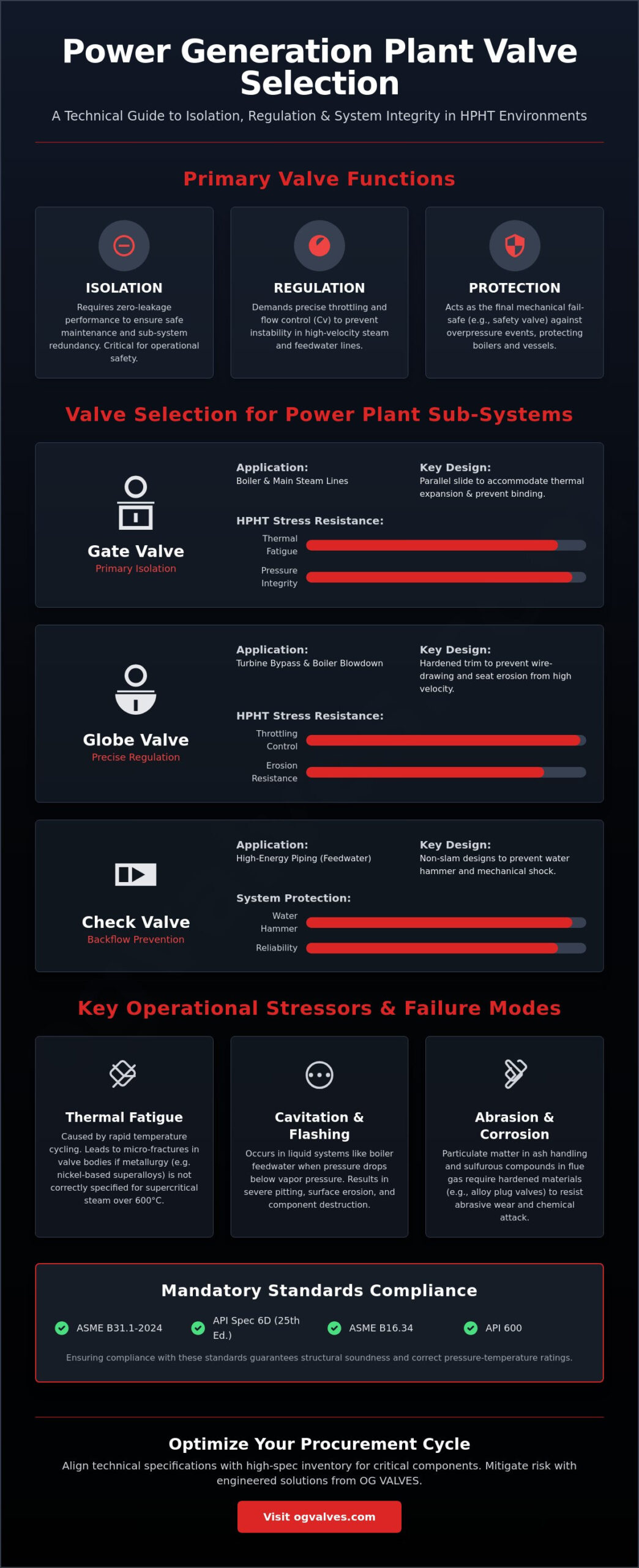
A single valve failure in a supercritical steam circuit results in immediate unscheduled downtime and substantial revenue loss for modern utility providers. Engineering teams recognize that operational reliability depends on the precise metallurgical alignment of components with specific thermodynamic stressors. This technical guide provides a comprehensive analysis of power generation plant valve applications, focusing on the selection of gate, globe, and check valves that adhere to the most rigorous industrial benchmarks.
This article defines the specifications necessary to ensure procurement compliance with the ASME B31.1-2024 power piping code and the API Spec 6D 25th edition, which became effective on January 1, 2026. We’ll evaluate how current market variables, such as global nickel prices reaching $19,204.64 per ton in May 2026, influence the selection of high-spec alloys for butterfly and needle valves. Our analysis concludes with a framework for streamlining supply chains to mitigate the risks of material degradation in high-pressure environments.
Key Takeaways
- Define the operational distinctions between isolation and regulation functions across diverse power generation plant valve applications.
- Evaluate the performance of gate valves and globe valves under high-pressure, high-temperature (HPHT) stressors to maintain system integrity.
- Verify compliance with ASME B16.34 and API 600 standards to ensure structural soundness and appropriate pressure-temperature ratings.
- Implement non-slam check valve designs in high-energy piping systems to prevent water hammer and mechanical degradation.
- Optimize procurement cycles by aligning technical specifications with existing high-spec inventory for critical sub-system components.
The Critical Role of Valve Engineering in Modern Power Generation
Valve engineering constitutes the primary control layer within the complex thermodynamic cycles of utility-scale facilities. In modern power generation plant valve applications, these components must manage extreme fluid velocities and pressure differentials while maintaining the integrity of the steam loop. Precision in valve actuation and sealing isn’t merely a maintenance concern; it’s a fundamental determinant of a plant’s heat rate and overall thermal efficiency. As the industry transitions toward supercritical and ultra-supercritical operating parameters, where steam temperatures exceed 600 degrees Celsius and pressures surpass 240 bar, the mechanical and metallurgical requirements for these components become significantly more stringent. These advanced cycles necessitate the use of nickel-based superalloys and specialized coatings to maintain structural soundness under creep conditions.
Isolation vs. Control: Functional Categorization
Functional categorization divides industrial valves into three primary operational roles: isolation, regulation, and protection. Isolation valves, such as high-pressure gate valves, require zero-leakage performance to ensure safe maintenance and sub-system redundancy. Throttling and flow regulation, typically managed by globe or needle valves, demand precise control over the flow coefficient (Cv) to prevent instabilities in high-velocity steam lines. Critical overpressure protection is managed by the safety valve, which acts as the final mechanical fail-safe against boiler or pressure vessel rupture. Each role requires a distinct set of material standards and design philosophies to withstand the specific stressors of the power cycle. Engineers don’t merely select components; they specify critical safety interfaces.
Operational Stressors and Failure Modes
The operational environment of a power plant subjects valves to rigorous mechanical and chemical degradation. Thermal fatigue occurs during rapid cycling or load following, leading to hairline fractures in valve body castings if the metallurgy isn’t correctly specified. In liquid systems, such as boiler feedwater lines, the risk of cavitation and flashing is high when pressure drops below the vapor pressure of the fluid. This results in severe pitting and surface erosion. Additionally, components in ash handling or flue gas desulfurization units must resist the abrasive nature of particulate matter and the corrosive impact of sulfurous compounds. Erosion in ash handling systems often dictates the use of hardened alloy plug valves to extend service life. Understanding these power generation plant valve applications requires a clinical focus on how material selection prevents premature component failure and unplanned outages.
Mapping Valve Types to Power Plant Sub-systems
Effective power generation plant valve applications depend on the precise allocation of mechanical mechanisms to the specific thermodynamic demands of the “hot” and “cold” ends of the facility. The hot end, comprising the boiler and main steam lines, requires components capable of maintaining structural integrity under extreme thermal expansion and creep. Conversely, the cold end, which includes the condenser and cooling water circuits, prioritizes high-volume flow management and resistance to electrochemical corrosion. Failure to distinguish these requirements leads to accelerated material degradation and increased maintenance overhead. Precision is mandatory in these environments. The cold end demands high-volume flow, while the hot end requires metallurgical stability.
Boiler and Steam Cycle Applications
Within the boiler and steam cycle, gate valves are the primary choice for main steam isolation. Parallel slide designs are frequently specified over wedge-type gates because they accommodate the significant thermal expansion occurring during startup and shutdown cycles without risk of thermal binding. Turbine bypass systems utilize high-performance globe valves to provide precise throttling, allowing steam to bypass the turbine and enter the condenser during load rejection or startup. Boiler blowdown service presents a unique challenge, as valves must handle high-pressure differentials and abrasive media. This often necessitates the use of specialized plug or globe valves with hardened trim to prevent wire-drawing and seat erosion. Proper selection reduces the frequency of component replacement in these high-stress zones.
Feedwater and Condensate Systems
Feedwater and condensate systems utilize check valves to prevent backflow into high-pressure pumps. These components must be non-slam or tilting-disc designs to mitigate hydraulic shock and water hammer. Feedwater heater bypass operations often employ three-way valves for efficient thermal management during maintenance. For condenser isolation in large-scale cooling water systems, butterfly valves are the standard due to their compact face-to-face dimensions and ability to manage high flow rates at low pressure. Deaerator level control requires the precise modulation offered by ball valves or globe patterns, ensuring dissolved oxygen is removed before the water is pumped back into the boiler. For critical infrastructure projects, evaluating a comprehensive technical inventory of these components is essential for maintaining operational uptime and ensuring long-term reliability.
Mitigating Operational Stressors: HPHT and Cavitation
High-pressure, high-temperature (HPHT) service dictates the mechanical limits of valve seat design. In modern power generation plant valve applications, seats must maintain a bubble-tight seal while subjected to temperatures often exceeding 540°C. Material selection is the primary defense against these conditions. Hardfacing alloys, specifically Stellite, are applied to seating surfaces to provide necessary wear resistance and prevent galling. Without these cobalt-based overlays, high-velocity fluids cause rapid wire-drawing and seat erosion, leading to bypass leakage and system inefficiency. Precision is non-negotiable in these high-stress environments.
Check valves in high-energy piping require non-slam characteristics to ensure long-term reliability. Conventional swing check valves often fail during rapid flow reversal, resulting in catastrophic water hammer that can rupture pipe welds. Non-slam designs, such as nozzle or tilting-disc patterns, utilize spring-assisted closure to ensure the valve is seated before the flow reverses. This protects upstream pumps and maintains structural integrity. Automation also plays a critical role. High-performance actuators are integrated to ensure rapid fail-safe response during transient events. These systems must provide the necessary torque to overcome high differential pressures while operating under significant thermal loads.
Anti-Cavitation and Noise Attenuation
Cavitation occurs when the local pressure in a liquid system drops below its vapor pressure, forming bubbles that collapse violently. Feedwater control valves are particularly susceptible. To prevent this, engineers specify multi-stage trim designs. These components manage the pressure drop across multiple discrete stages, ensuring the fluid pressure remains above the vapor threshold. Noise-reducing cages are also utilized in steam venting applications to attenuate the sonic vibrations caused by high-pressure steam expansion. These designs prioritize the following:
- Management of fluid velocity through tortuous path trim.
- Prevention of impingement on valve body walls.
- Reduction of decibel levels to meet OSHA safety requirements.
Thermal Management and Material Expansion
Thermal cycling introduces significant mechanical risks, such as pressure locking in flexible wedge gate valves. This phenomenon occurs when fluid trapped in the bonnet cavity expands due to external heat, creating a pressure differential that prevents the valve from opening. To maintain seal integrity during these cycles, live-loaded packing systems utilize Belleville springs to apply constant pressure to the gland. This compensates for material expansion and contraction. Thermal binding occurs when a valve is closed at high temperatures and subsequent cooling causes the body to contract more rapidly than the wedge, mechanically seizing the internal components.
Material Specification and Compliance with Global Standards
ASME B16.34 serves as the primary regulatory foundation for defining pressure-temperature ratings in power generation plant valve applications. This standard ensures that valve bodies and internal components possess the structural integrity necessary to withstand the intense mechanical loads of high-pressure steam loops. API 600 provides the design criteria for heavy-duty gate valves, specifying minimum wall thickness and stem diameters that exceed standard industrial requirements for enhanced durability. For applications requiring corrosion resistance in specialized sub-systems, API 603 governs the design of stainless steel and alloy valves. These benchmarks are mandatory for ensuring long-term operational safety.
In flue gas desulfurization (FGD) and ash handling systems, standard carbon steels fail rapidly due to acidic slurry exposure and particulate abrasion. Engineers specify Duplex or Super Duplex stainless steels to provide the necessary resistance against chloride-induced stress corrosion cracking and pitting. Quality assurance protocols must include Positive Material Identification (PMI) to verify alloy composition before final assembly. Non-Destructive Testing (NDT), such as radiographic and ultrasonic examinations, is required for Class 900 through Class 2500 components to detect internal casting or forging defects that could lead to catastrophic failure under load.
High-Alloy Steel Selection for Steam Service
ASTM A216 WCB carbon steel is typically limited to non-critical service where temperatures remain below 425°C. For the high-temperature “hot” end of the plant, ASTM A217 grades WC6 and WC9 are required. WC9 contains higher concentrations of chromium and molybdenum, which significantly enhances creep strength and oxidation resistance at temperatures reaching 593°C. In ultra-supercritical facilities, even these alloys are insufficient. Engineers utilize F91 and F92 martensitic steels. These materials maintain high tensile strength and structural stability under the extreme conditions characteristic of advanced thermal cycles. Metallurgy dictates performance.
Regulatory Adherence and Documentation
Regulatory compliance requires comprehensive documentation to ensure full component traceability. EN 10204 3.1 and 3.2 certifications provide verified test results from the manufacturer or independent third-party inspectors. In environments where hydrogen sulfide is present, adherence to NACE MR0175 is required to prevent sulfide stress cracking and hydrogen-induced damage. For high-pressure service, Class 2500 valves are rated for working pressures up to 6,250 psi at ambient temperature, though these ratings decrease as operating temperatures increase. Procurement teams should consult technical documentation for high-spec inventory to ensure all certifications align with project-specific regulatory requirements and safety mandates.
Strategic Procurement and Technical Supply for Power Infrastructure
Strategic procurement within the energy sector requires a clinical focus on supply chain risk and engineering alignment. The selection of components for power generation plant valve applications must balance technical compliance with logistical efficiency. Reliability isn’t a marketing claim; it’s a measurable function of engineering excellence and material traceability. Procurement specialists must partner with organizations that understand the economic impact of unscheduled outages. Precision in the supply chain is as critical as precision in the valve seat itself.
Fast-Track Delivery and Inventory Management
Maintaining operational uptime requires immediate access to high-specification inventory. OG VALVES LTD. maintains a strategic stock of gate, globe, and check valves specifically engineered for high-pressure power cycles. This inventory includes large-bore components and non-standard material grades such as F91 and WC9, which are essential for maintaining the integrity of supercritical steam lines. By utilizing a robust global logistics network, the organization significantly reduces lead times for critical infrastructure projects. This capability ensures that replacement components reach international facilities without the delays typical of custom manufacturing cycles. Efficient inventory management acts as a safeguard against the high costs of extended plant downtime.
Technical Support and Quality Assurance
Effective technical supply extends beyond the delivery of hardware. It involves providing authoritative guidance on valve sizing and material compatibility for advanced thermal cycles. Engineers must evaluate project-specific data sheets to ensure every component meets the required flow coefficients and pressure-temperature ratings defined by ASME B16.34. Rigorous testing protocols, including hydrostatic and pneumatic pressure tests, verify that each valve adheres to the benchmarks established for safety and durability. This technical oversight ensures that all ball, butterfly, and needle valves integrated into the plant sub-systems perform according to their design specifications. Contact OG VALVES LTD. for technical consultation on your power plant valve requirements to ensure your facility maintains its performance and safety standards through verified engineering excellence.
Optimizing Infrastructure Reliability through Technical Precision
Maintaining operational integrity in modern utility facilities requires a clinical focus on component specification and metallurgical suitability. This guide has detailed how aligning specific valve mechanisms with sub-system thermodynamic profiles reduces the risk of unscheduled downtime. Adherence to ASME B16.34 and API 600 standards ensures that components withstand the mechanical loads inherent in high-pressure steam loops. It’s clear that effective power generation plant valve applications depend on this intersection of engineering precision and regulatory compliance.
Request a Technical Quote for Power Generation Valves to secure reliable components for your next project.
Frequently Asked Questions
What are the most common valves used in a thermal power plant?
Gate, globe, check, and butterfly valves constitute the primary mechanical interfaces in thermal power cycles. Gate valves provide zero-leakage isolation for high-pressure steam, while globe valves are utilized for precise flow regulation. Check valves protect pumps from backflow, and butterfly valves manage large-volume cooling water. Each type is selected based on specific pressure-temperature ratings and flow coefficients defined by the system’s thermodynamic requirements.
How do high-temperature steam applications affect valve material selection?
High-temperature steam requires the use of chromium-molybdenum and martensitic steels to prevent material creep and oxidation. Standard carbon steel loses structural integrity above 425°C, necessitating grades like ASTM A217 WC9 or F91 for supercritical applications. These alloys ensure long-term metallurgical stability under the extreme thermodynamic stressors found in the boiler and main steam lines. Selecting the wrong grade results in rapid material degradation.
Why are parallel slide gate valves preferred for main steam isolation?
Parallel slide gate valves are preferred because their design eliminates the risk of thermal binding during rapid temperature changes. Unlike wedge-type valves, the parallel discs can accommodate the significant thermal expansion of the valve body without becoming mechanically seized. This ensures reliable isolation during critical startup and shutdown sequences in high-pressure steam service. It’s a fundamental requirement for maintaining plant safety and operational flexibility.
What standards govern the design of valves for power generation?
The design and application of valves are governed by ASME B31.1 for power piping and ASME B16.34 for pressure-temperature ratings. API 600 defines the requirements for heavy-duty gate valves, while API 6D 25th edition covers pipeline and piping valves. Compliance with these standards is mandatory for ensuring the structural soundness of power generation plant valve applications and maintaining regulatory adherence across global jurisdictions.
How can cavitation be prevented in power plant control valves?
Cavitation is prevented by utilizing multi-stage trim in control valves to manage pressure drops in discrete steps. This technical approach ensures that the local fluid pressure never falls below the vapor pressure, which stops the formation of erosive bubbles. Engineers also specify hardened trim materials to resist any residual mechanical wear in high-velocity feedwater systems. This design philosophy extends the service life of critical regulation components.
What is the role of check valves in boiler feedwater systems?
How does OG VALVES LTD. support fast-track delivery for power plant outages?
OG VALVES LTD. supports maintenance outages by maintaining a comprehensive inventory of API and ASME compliant gate, globe, and check valves for immediate dispatch. The organization utilizes a global supply chain to provide fast-track delivery of large-bore components and specialized alloys like F91. This logistical capability reduces lead times for critical components, helping facilities minimize unscheduled downtime during high-stakes procurement cycles and emergency repair scenarios.
Which valve types are best suited for cooling water systems in power plants?
Large-diameter butterfly valves are the standard for cooling water systems due to their compact face-to-face dimensions and high flow capacity. Ball valves are also utilized in smaller auxiliary lines where tight shut-off and low pressure drop are required. These valves are typically specified with corrosion-resistant coatings or materials to withstand the electrochemical stressors of circulating water circuits. Proper selection ensures efficient thermal rejection in the condenser loop.
 Responsive Menu